Launching a second language used to mean hiring an agency, mailing spreadsheets back and forth, and waiting a month to find out whether the French version of your pricing page read naturally or like a machine had chewed it. That bottleneck is mostly gone. The machine got good, and the question changed. It is no longer whether you can afford to translate a website. It is which tool fits the way your site is actually built and how much control you need over the words that come out the other side.
That distinction matters more than any accuracy benchmark, because the five tools covered here solve genuinely different problems. One drops a script tag onto a live site and has it serving ten languages before lunch. Another is a raw translation engine that engineers call from their own code. The other three are full localization platforms where translation is only one piece of a larger machine that also handles glossaries, review queues, and release cycles. Picking the wrong category is the expensive mistake, not picking the second-best tool within the right one.
The short version If you run a marketing site or store and want it multilingual this week with strong SEO, look at Weglot first. If you need the cleanest possible raw translation for European languages and have developers to wire it in, DeepL. If you are localizing a product with strings, screens, and releases, the choice is between Lokalise, Phrase, and Smartling, and it comes down to team size and how much governance you need. |
The rest of this guide works through each of those five, what it is genuinely good at, where it quietly falls short, and what it costs. The comparisons and figures draw on vendor documentation and recent independent pricing reviews rather than first-hand testing, so treat the numbers as a current snapshot to confirm before you buy, not a benchmark lab result.
Translation is the easy half. Localization is the hard half.
It helps to separate two words people use interchangeably. Translation turns a sentence from one language into another. Localization makes the whole experience feel native: the currency on the checkout button, the date format in the footer, the tone of a support article, and crucially the signals that tell a search engine which version of a page belongs to which audience. A tool can be excellent at the first job and useless at the second.
The search engine part is where a lot of website owners get burned. Google treats language variants of a page as related documents and wants to be told, explicitly, which URL serves which locale. Get that wrong and you can end up with the German page competing against the English one, or neither ranking at all. Google's own guidance on this is worth reading before you commit to any approach, and its documentation on running multi-regional and multilingual sites lays out exactly how to structure URLs and annotations so each language version earns its own standing in results.
For the technical backbone of that work, the authoritative reference is Google Search Central's documentation on managing multi-regional and multilingual sites, which explains hreflang annotations, canonical handling, and the difference between a multilingual and a multi-regional site. Any tool you shortlist should either handle this for you or make it trivial to do by hand.
The reason this guide leans on hreflang and URL structure as a dividing line is practical. A no-code website tool like Weglot does this automatically, which is most of why people buy it. A raw engine like DeepL does none of it, because it only hands you translated text and leaves the plumbing to you. The platforms sit in between, handling it well once configured but asking for configuration first. So before you compare features, decide whether you want the SEO scaffolding built in or whether you have the engineering time to build it yourself.
A quick gut check before you read on Ask who will press the translate button and who owns the result. If it is a marketer who wants the site live, you want a website tool. If it is a developer translating strings in a repository, you want a platform or an engine. If it is a localization manager coordinating linguists across releases, you want governance, which narrows you to the enterprise platforms. |
The five tools at a glance
Here is the whole shortlist in one view before the detailed profiles. Read the rightmost column first: it tells you who each tool is actually built for, which is the fastest way to rule options in or out.
| Tool | What it really is | Starts at | Best fit |
|---|---|---|---|
| Weglot | No-code website translation layer | Free; ~$17/mo | Marketing sites and stores wanting speed and SEO |
| DeepL | Raw machine translation engine + API | API Free; Growth ~$32.50/mo | Developers who want the cleanest European-language output |
| Lokalise | Product localization platform | ~$120/mo tier | Mid-market product and app teams |
| Phrase | Enterprise localization suite | ~$27/mo entry; business ~$135/mo+ | Larger teams and language service providers |
| Smartling | Enterprise TMS with managed services | Custom quote | Regulated and content-heavy enterprises |
Figures are the lowest published self-serve tiers as of October 2026 and move around with promotions and currency. Always confirm on the vendor's own pricing page before buying.
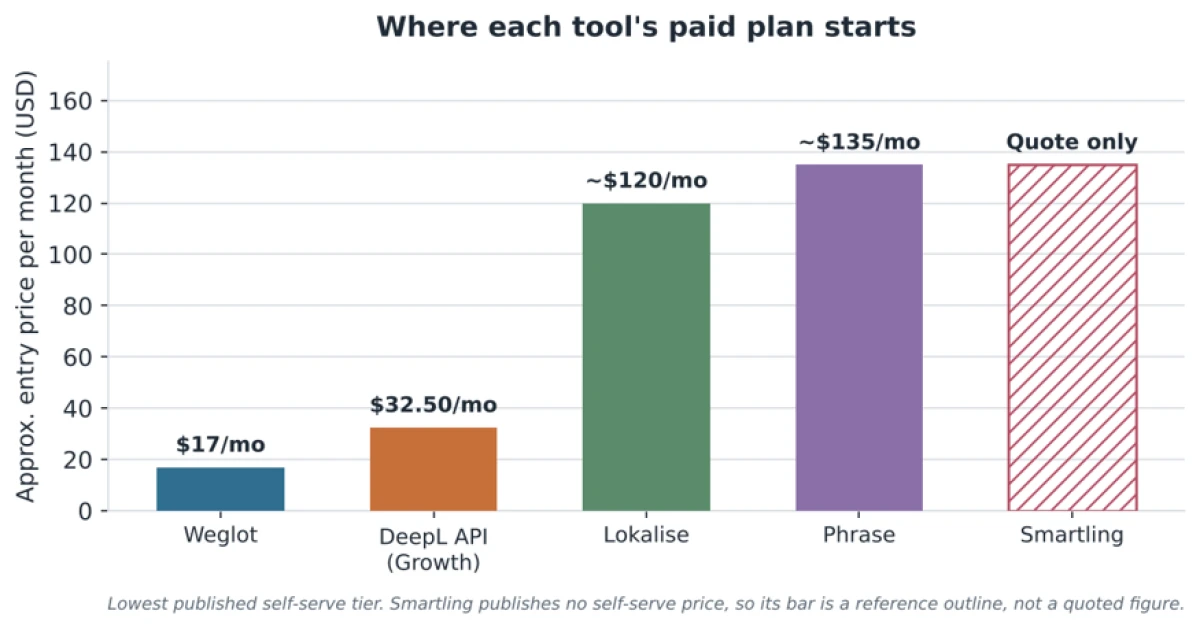
Entry pricing spreads across more than an order of magnitude. The gap between a website layer and an enterprise platform is a gap in what you are buying, not just a markup.
1. Weglot
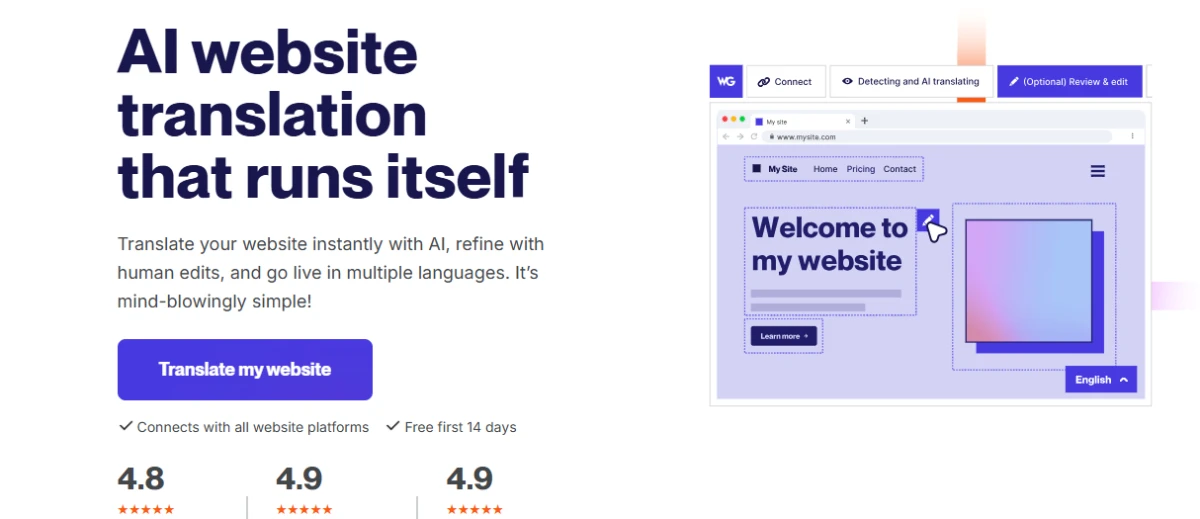
Weglot earns its spot at the top of almost every website-translation list for one reason: it removes the engineering project entirely. You connect it to your site, it detects the content, machine-translates a first pass, and serves the translated versions on clean URLs with the SEO signals already in place. For a WordPress, Shopify, Webflow, or custom site, the whole thing can be live in the time it takes to read this section.
What it does well
- Setup is genuinely no-code. The script tag or plugin approach means a marketer can launch a multilingual site without filing a ticket with engineering.
- The SEO handling is the real draw. It generates dedicated subdirectories or subdomains per language, builds a multilingual sitemap, and manages hreflang tags automatically, which is exactly the scaffolding that trips people up when they do it by hand.
- The workflow is a sensible hybrid: machine translation does the first pass fast, then you manually polish the pages that need a human touch, such as SEO titles and product descriptions where tone matters.
- It leans on strong underlying engines and keeps a translation memory so repeated phrases stay consistent and are not re-billed every time.
Where it falls short
- Pricing is tied to word count and number of translated languages, so a large catalog site can climb the tiers quickly. The free plan covers only around 2,000 words, which is a demo, not a store.
- It is built for websites, not for software string workflows. If your translatable content lives in JSON files or a mobile app rather than on rendered web pages, this is the wrong category of tool.
Pricing reality Weglot runs a free tier for trials, then paid plans that in recent reviews sit around $17 per month at the Starter end and climb through Business and Pro tiers into the hundreds per month for larger sites with more languages and projects. Enterprise is custom. The cost is predictable but scales with volume, so model your real word count before committing. |
Verdict: If the person pressing the button is in marketing and the goal is a polished multilingual site with search visibility and no development work, Weglot is the default answer and the burden of proof is on any alternative. Choose something else only when your content does not live on web pages.
2. DeepL
DeepL is the tool people reach for when the raw quality of the translated sentence is what matters most. For the roughly thirty-plus languages it covers deeply, most of them European, it tends to produce output that reads more naturally than the alternatives, with better handling of tone, idiom, and register. Where it fits into a localization stack is as the engine, not the whole car.
What it does well
- Output quality in its core languages is its reputation and it is deserved. For German, French, Spanish, and similar pairs, the translations need less human cleanup than most competitors.
- The API is clean and well documented, with a formality parameter that lets you request a formal or informal register in languages that distinguish the two, which is a genuinely useful lever for brand voice.
- Glossary support lets you lock brand terms and product names so they survive translation intact, and the document mode preserves formatting across Word, PDF, PowerPoint, and HTML.
- A permanently free API tier allows a meaningful volume of characters per month for testing before you commit to a paid plan.
Where it falls short
- It is not a localization management system. There is no translation memory across projects in the platform sense, no string key management, no in-context review, and no linguist workflow. Teams pair it with a separate platform for all of that.
- The quality advantage narrows sharply outside its supported languages. For Hindi, Vietnamese, Swahili, and many others, you are falling back to broader-coverage engines anyway.
- Per-character API billing adds up on large pipelines. Translating millions of words through the API is a real line item, and cost scales close to linearly with volume.
Pricing reality By mid-2026 DeepL had reshaped its API plans, with a Developer tier offering a one-time testing credit and a Growth tier reported around $32.50 per month for roughly a million characters monthly plus usage, alongside Enterprise. The older API Free and Pro plans were closed to new signups, though existing users kept them. Confirm current tiers directly, since this is the part of DeepL that has changed most. |
Verdict: Reach for DeepL when you have developers to integrate it and your priority languages are the ones it does best. Treat it as the quality engine inside a larger workflow rather than a standalone website solution, and keep a broader-coverage engine on hand for the languages it does not reach.
3. Lokalise
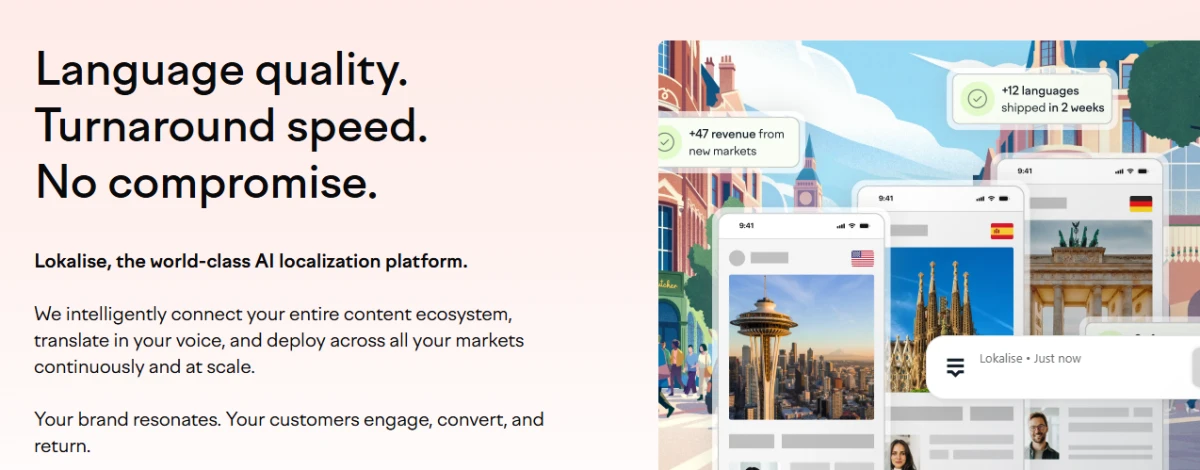
Lokalise is where the conversation shifts from translating a website to localizing a product. It is a translation management system built for fast-moving software, mobile, and web teams, with the automation, file-format support, and integrations that a product organization needs to keep translated content in step with its release cycle. Translation here is an orchestrated workflow, not a single button.
What it does well
- It speaks the file formats and tools developers actually use, syncing strings from repositories and connecting to the design and project tools where product work happens.
- The AI orchestration layer grounds machine output in your own translation memory, glossary, and style rules, so translations stay consistent and on-brand across releases rather than drifting with each new batch.
- Translation scoring and quality features flag weak output automatically, and higher tiers add custom AI profiles trained on your content.
- Pricing is more transparent than most of the enterprise field, with published tiers rather than a mandatory sales call to see a number.
Where it falls short
- Cost scales with processed words and AI allowances. Reviewers note that translation volume and integration costs can climb, so the effective price depends heavily on how much you push through it.
- It is more platform than a small team may need. If you are translating a brochure site, the string-management machinery is overhead you will not use.
Pricing reality Lokalise publishes tiered plans that, in recent listings, start in the low hundreds of dollars per month and rise through Growth and Advanced tiers with increasing annual allowances of AI-translated words and features like custom AI profiles at the top. Enterprise is quote-based. The published numbers make it easier to budget than the quote-only platforms, but watch the word allowances closely. |
Verdict: Lokalise is the strong default for a mid-market product team that has outgrown spreadsheets but is not an enterprise with a dedicated localization department. It hits the sweet spot of developer-friendly, reasonably transparent, and genuinely capable, provided your content is strings and screens rather than rendered marketing pages.
4. Phrase
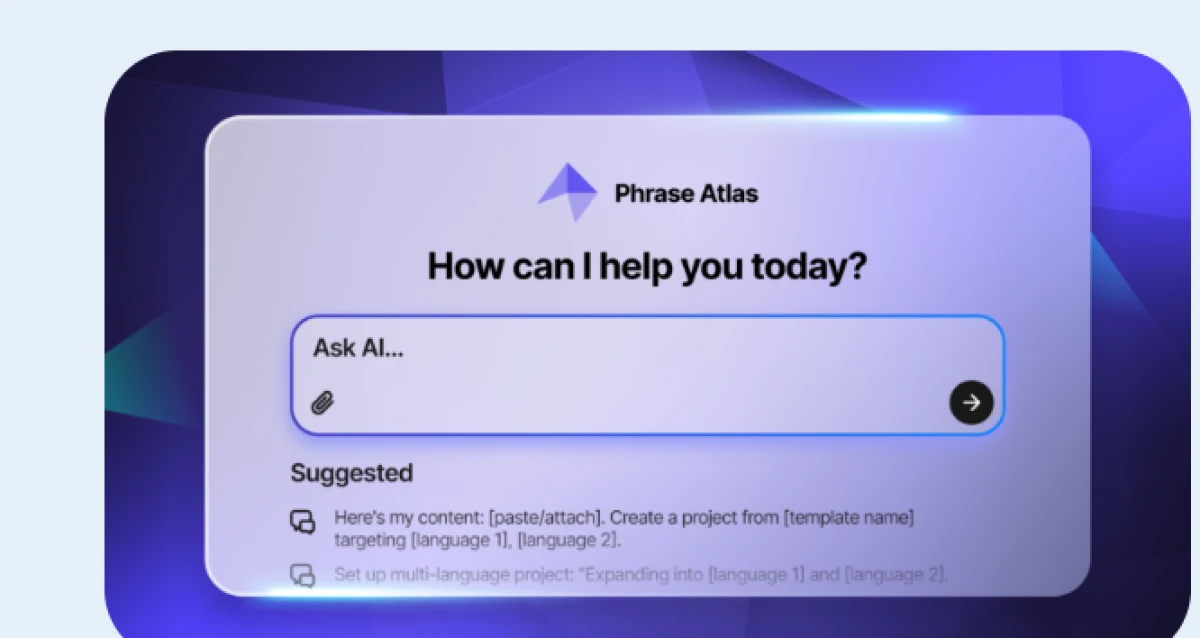
Phrase, formed from the merger of PhraseApp and Memsource, is the pick for teams that want the whole localization supply chain under one roof. Software strings, document translation, a professional CAT editor, machine translation, and an orchestration layer that routes content to the best engine all live in a single platform, which is why it serves both in-house enterprise teams and the language service providers who work for them.
What it does well
- The orchestration layer is the smart part. Phrase picks the best machine translation engine per language pair and content type, scores the output, and routes weak segments for human review automatically.
- It covers both halves of localization in one subscription: Phrase Strings for software, and a TMS for documents and translator coordination, so you are not stitching together a stack of point tools.
- The AI-powered quality checks catch translation errors, terminology drift, and formatting problems before they ship, which is exactly what large programs need to maintain consistency at volume.
- It earns consistently strong user reviews for serving the whole translation chain, from enterprise departments to freelance translators collaborating in real time.
Where it falls short
- Business-grade plans are expensive, climbing to four figures per month for the tiers most enterprises actually need, so the entry price understates the real cost of a serious deployment.
- The breadth is overkill for a small team. If you do not need both software and document localization with engine orchestration, you are paying for capability you will not touch.
- With breadth comes configuration. This is a platform you set up deliberately, not a tool you switch on.
Pricing reality Phrase publishes a wider ladder than most, with an entry point reported around $27 per month and professional and business tiers climbing to roughly $1,000 or more per month billed annually, plus Enterprise on quote. Independent pricing data has pegged the median annual Phrase deal around $20,000, which is the figure to plan against for a real enterprise rollout rather than the headline entry price. |
Verdict: Phrase is the enterprise choice when you want one platform covering both software and content localization with intelligent engine routing. Budget for the business tier, not the entry price, and it rewards teams large enough to use its orchestration rather than those who just need strings translated.
5. Smartling
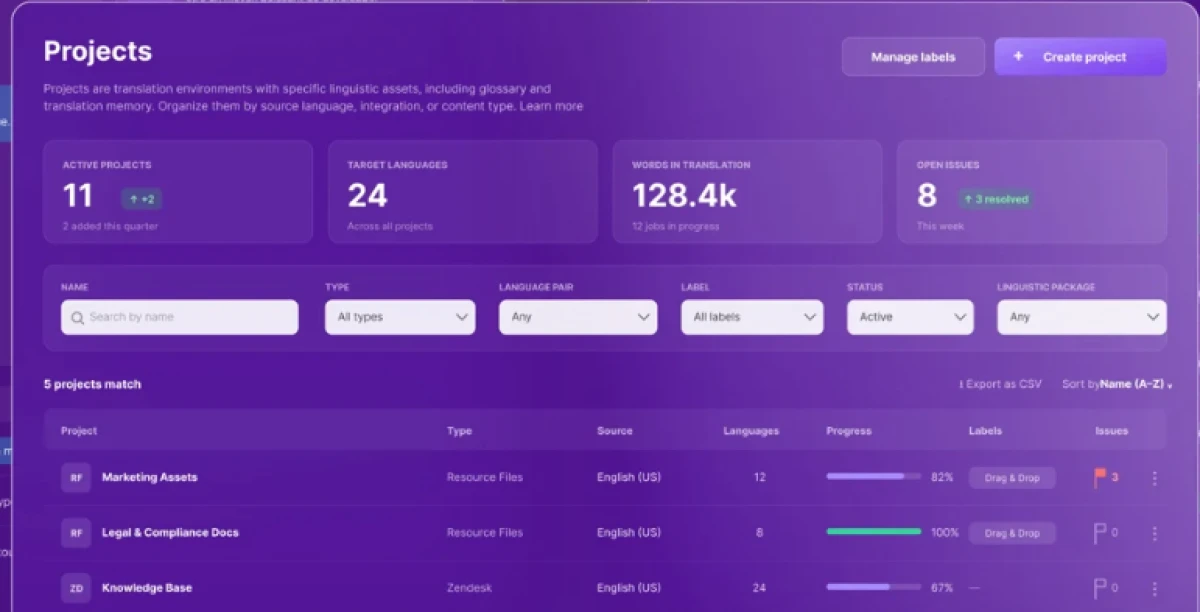
Smartling is the enterprise translation management system built for organizations that treat localization as an ongoing operation rather than a project. It blends AI translation with managed human services and a workflow engine, and it is a common pick for regulated industries and content-heavy companies that need translation at volume with professional review and quality guarantees baked in.
What it does well
- The AI layer routes content across many engines and picks what performs best per job, then feeds a continuous localization pipeline that keeps translated content in sync as source content changes.
- It pairs AI drafting with human post-editing in one managed pipeline, which is the model regulated and quality-critical teams want: speed from the machine, accountability from a reviewer.
- A website translation proxy and strong CMS integrations make it capable for large multilingual sites managed by a central team, not just app strings.
- It is positioned for enterprises with dedicated localization staff who need governance, reporting, and quality controls at scale.
Where it falls short
- There is no published self-serve pricing and no quick sign-up. Everything runs through sales, which makes it hard to evaluate quickly and signals that it is not aimed at small teams.
- The pricing structure has a reputation for being confusing, and buyers report meaningful negotiated discounts off initial quotes, which tells you the list figure is a starting point, not the real one.
- It is enterprise-weight. For a startup or a single marketing site, it is far more machine than the job needs.
Pricing reality Smartling does not publish self-serve prices. It offers a free entry option in some comparisons but steers buyers to a custom quote, and independent cost data suggests average negotiated discounts around half off the initial number. Go in expecting a sales process and a negotiation, and budget enterprise money, not SaaS-subscription money. |
Verdict: Smartling makes sense for a large enterprise with dedicated localization staff that needs AI translation backed by professional human review and strong governance, especially in regulated or content-heavy settings. For everyone smaller, the lack of transparent pricing and the operational weight make it the wrong starting point.
Matching the tool to the job
The feature lists blur together after a while, so it helps to score each tool on the handful of jobs that actually decide the purchase. The chart below rates all five on four dimensions: how well each handles no-code website translation, raw machine-translation quality, software and app string workflows, and enterprise governance. These are editorial judgements drawn from the research rather than lab measurements, but they map cleanly onto the buying decision.
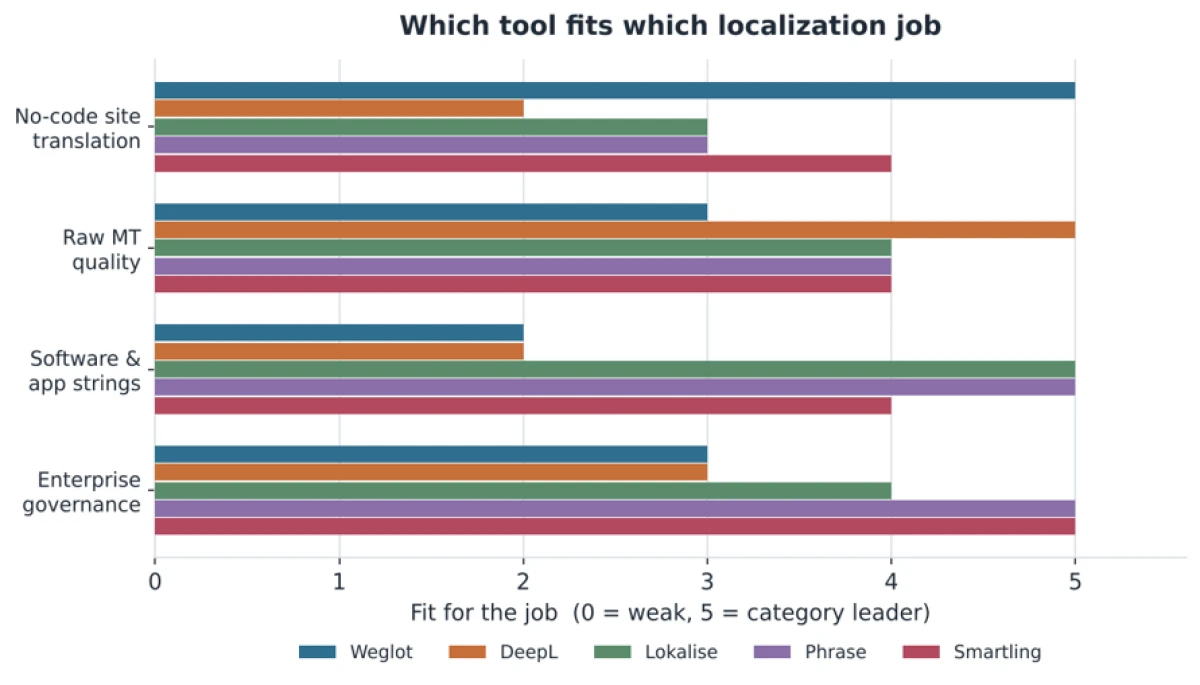
No single tool wins every column. Weglot owns the website row, DeepL owns raw quality, and the three platforms separate out on string workflows and governance depth.
The pattern is clear once you see it laid out. The website row and the quality row each have a clear leader. The two rows that matter for product teams, string workflows and governance, are where Lokalise, Phrase, and Smartling trade places depending on how big and how regulated your operation is. If your eye is drawn to the governance column, you are an enterprise buyer and your real shortlist is two names, not five.
Language reach is not the deciding factor people think it is
Buyers often fixate on the headline language count, so it is worth putting in perspective. The platforms reach a hundred or more languages because they route through multiple machine-translation and large-language-model engines under the hood. DeepL's own model supports fewer languages but goes deeper on each. In practice, the count only matters if one of your target languages sits outside a tool's coverage. If you are localizing into mainstream European and major world languages, every tool here covers you, and quality and workflow matter far more than the number on the box.
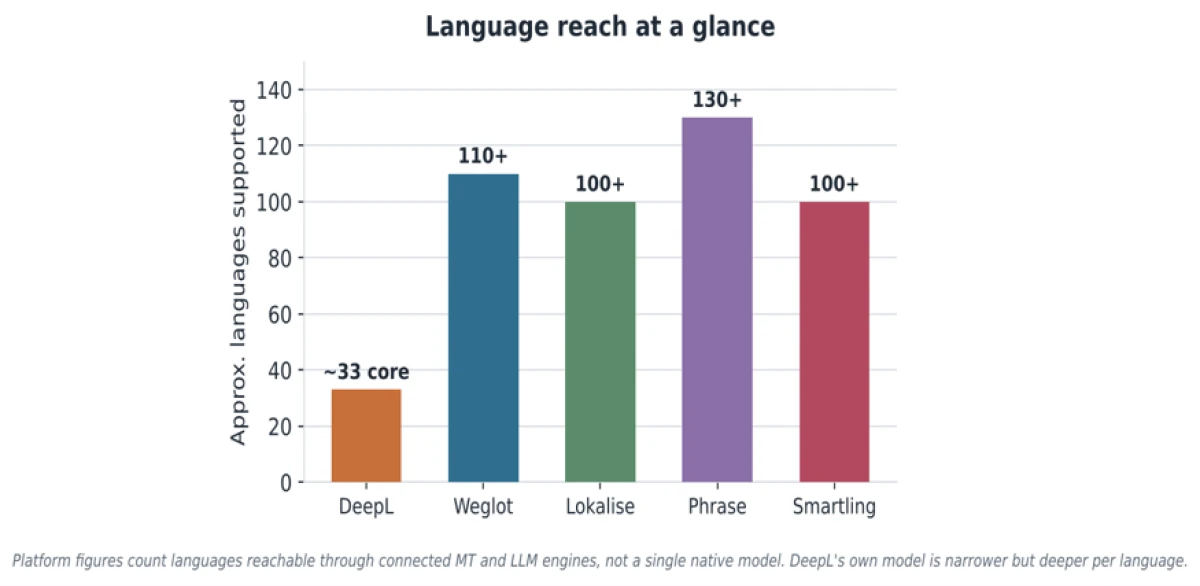
Headline language counts flatter the platforms because they aggregate many engines. Read them as coverage breadth, not a quality ranking.
A decision path you can actually follow
Rather than weighing twenty features, answer these questions in order and stop at the first one that fits. This is how the decision tends to resolve in practice.
| If this is you | Start here | Because |
|---|---|---|
| Marketing site or store, want it live this week, no developers | Weglot | No-code setup plus automatic multilingual SEO is exactly its wheelhouse |
| Need the cleanest raw output for European languages, have developers | DeepL | Best-in-class quality in its core languages, with a clean API and formality control |
| Localizing a product with strings and releases, mid-market team | Lokalise | Developer-friendly platform with transparent tiers and AI grounded in your TM |
| Large team or agency wanting software and content in one suite | Phrase | Engine orchestration plus a full TMS and CAT editor under one subscription |
| Content-heavy or regulated enterprise needing AI plus human review | Smartling | Managed services, governance, and continuous localization at operational scale |
Before you commit, run this checklist
- Model your real word count and language count against the pricing tiers, not the entry price. The headline figure rarely reflects what a real site or product will cost once volume is in.
- Confirm the SEO handling if this is a website. Check that hreflang, translated URLs, and sitemaps are handled the way Google's multilingual site guidance expects, either automatically or with little effort.
- Load your actual glossary and brand terms into a trial. Generic demo content hides the term-consistency problems that show up on your real product names.
- Translate a few of your hardest pages, not your easiest. The homepage always looks fine. Test the legal page, the technical spec, and the idiomatic marketing copy.
- Decide who owns ongoing quality. A tool with no review workflow means your team owns every correction forever, which is fine until the content volume grows.
The bottom line
There is no single best AI translation tool for website localization, and anyone who tells you otherwise is selling one. The right answer falls out of two questions: what is your content made of, and who owns the result. A rendered marketing site with a marketer at the wheel points at Weglot. A codebase full of strings with developers at the wheel points at a platform, with Lokalise for mid-market, Phrase for enterprise breadth, and Smartling for regulated, content-heavy operations. DeepL sits across all of them as the quality engine you can plug in where its languages shine.
Start by placing yourself in the right category, then let budget and team size pick the specific tool within it. The category mistake is the one that costs months. The tool choice within the right category is a far more forgiving decision, and most of the five here will serve you well once you have narrowed to the one built for the way you actually work.

Emily Carter is a technology writer at TechJox, specializing in Artificial Intelligence, emerging AI tools, software platforms, and digital innovation. She covers the latest tech news, cybersecurity updates, product reviews, and automation trends. Her writing focuses on research-driven insights, practical information, and simple explanations that help readers understand evolving technologies and stay informed about the digital world.
Discussion (0)
You need a free TechJox account to join the discussion and report scams you spot.