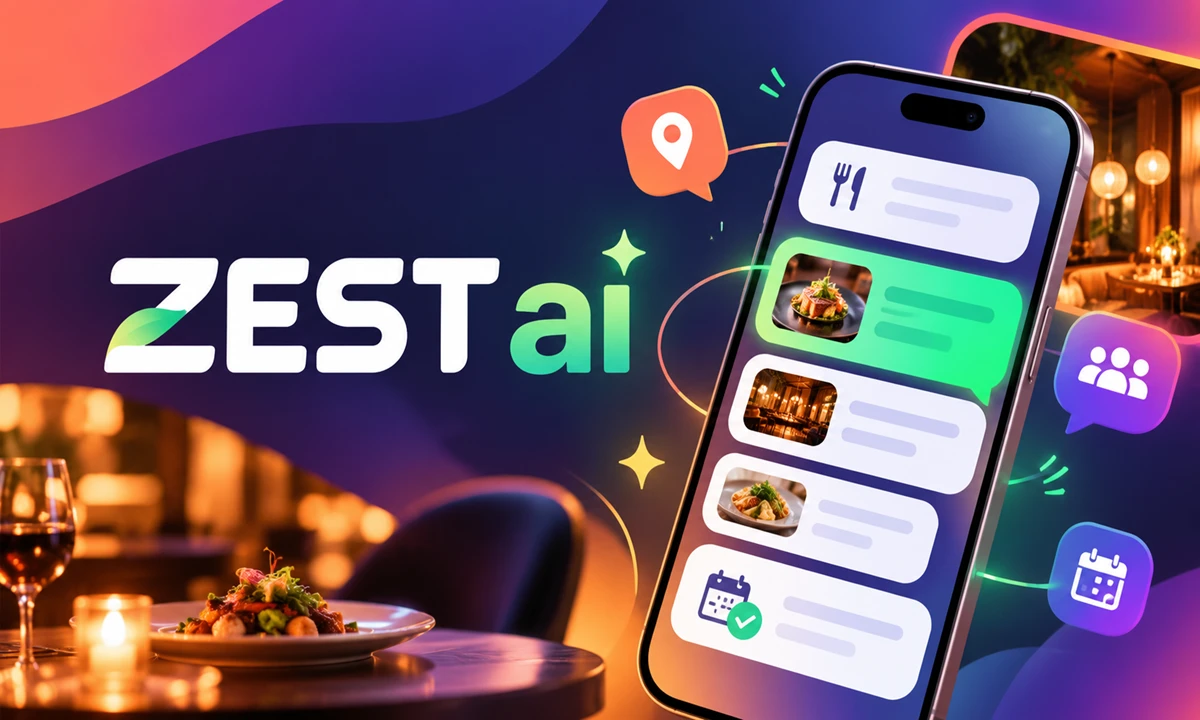
Zest, the San Francisco restaurant discovery startup that opened its iOS app to the public in May, released an AI concierge on Thursday that runs entirely over text messages. Users text (212) 470-6067, describe the meal they have in mind, receive a short list of restaurants and let the agent book the table. The company announced the product at textzest.com, and TechCrunch reported the release the same day.
Zest tested the concierge through September but held the launch until booking worked end to end, founder and CEO Mario Gomez-Hall said. “The agent is the product now,” he told TechCrunch. It answers from a user’s own dining history and from friends’ histories, which he says removes the weeks of back-and-forth a general assistant needs before its suggestions become useful.
How the Text Concierge Works?
The agent takes plain-language requests. A message such as a date night in the West Village on Thursday, good but not a scene, returns a handful of matches with a reason attached to each. Requests can specify cuisine, craving, occasion, dietary restrictions or neighborhood, and follow-up questions get direct answers: how busy a place tends to be, whether it has Wi-Fi, what to order, or whether it takes walk-ins. The agent can also send the menu.
When the user is ready, Zest checks live availability and books through OpenTable and Resy, with SevenRooms as a third connected platform, and the confirmation lands in the same thread. The service works on iPhone, including inside iMessage, and on Android. Zest also messages first about once a week at most, with weekend ideas or a note about where the user ate a year earlier; replying STOP ends those.
Group Chats, Taste Blending and Voting
Group handling is what sets the launch apart from a simple booking bot. Zest can be added to an existing group thread, where it reads the dining histories of everyone in the chat who uses the service and proposes places the whole group is likely to enjoy. When opinions split, it runs a vote inside the thread, then books the winning option without anyone leaving the conversation. A user can also ask Zest to build a list from their own history, such as favorite spots from a past trip for a friend heading to the same city.
Card Data Through Plaid, Not Star Ratings
What separates Zest from a general-purpose assistant is its data source. The app lets users optionally link a debit or credit card through Plaid, the financial data network used by banks and budgeting tools. Zest imports only food and drink transactions, discards the rest and builds a personal dining map from where the user has actually spent money, with fast food and fast-casual chains filtered out. The text agent inherits that history, which is why it needs no onboarding interview.
Card linking stays optional; without it the agent still works, with less to draw on. Zest’s FAQ states that card access is read-only, covers where and when a user ate, and that spending amounts never appear in the product. The launch page sums up the approach in three words: “Receipts, not reviews.”
Zest Text Concierge at a Glance
| Item | Detail |
|---|---|
| Launch date | Thursday, October 30, 2026 |
| How to use | Text (212) 470-6067 from any phone; no app required |
| Price | Free; no paid tier and no subscription |
| Platforms | iPhone (works in iMessage) and Android |
| Reservation partners | OpenTable, Resy and SevenRooms |
| Personalization source | Optional card link via Plaid, food and drink transactions only, read-only |
| Group features | Add to group chat, taste blending, in-thread voting, group booking |
| Proactive messages | About once a week at most; reply STOP to opt out |
| Testing period | September 2026; launch held until booking worked |
| Announced next steps | Food ordering; recommendations for businesses and shopping |
From App to Agent in Under a Year
Zest Maps Inc. was founded in November 2024 by Gomez-Hall, previously head of design at the social calendar app Saturn, which Snap acquired in 2025, and technical co-founder Alex Moller, who came from Apple. It raised $1.8 million in pre-seed funding from Alexis Ohanian’s 776 and Steve Jang’s Kindred Ventures, and opened to the public on iOS in early May. Wired called the app a spiritual successor to Foursquare, whose co-founder Dennis Crowley helped test the beta, and within weeks it had logged more than 100,000 restaurant visits.
The text agent changes the interface rather than the data: what the app knew about a user’s regulars now answers from a phone number instead of a map screen, reaching Android owners who could not install the iOS-only app. The app itself remains available for people who want to see their map and follow friends.
The Business Model
Zest charges nothing for the concierge. Gomez-Hall described booking and ordering as the first revenue lines: Zest already books through OpenTable and Resy, food ordering is on the way, and those transactions carry value a recommendation engine can share in. His pitch is that learning taste from verified spend gives Zest an edge over a general assistant worth more than dinner. The company has said it may expand the agent beyond restaurants into recommendations for businesses and shopping. One limit is built in: booking runs through the connected platforms, so a restaurant that takes reservations only by phone falls outside the agent’s reach.

Ethan Mitchell is a technology writer at TechJox, specializing in artificial intelligence, cybersecurity, SaaS platforms, software applications, and digital automation. His writing covers AI tools, data privacy, emerging technologies, and software reviews, with a focus on practical insights, clear explanations, and helping readers make informed technology decisions.
Discussion (0)
You need a free TechJox account to join the discussion and report scams you spot.