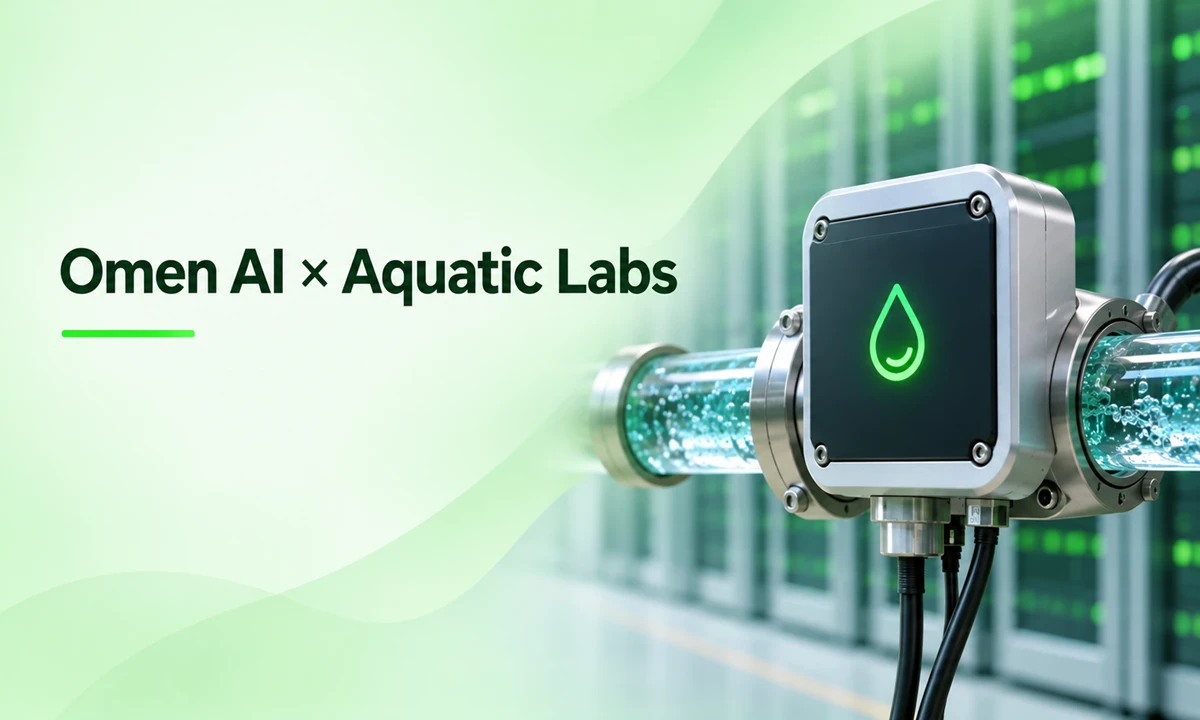
Omen AI, a San Francisco-based startup building real-time sensors for the fluids that keep AI chips cool, has agreed to acquire its competitor Aquatic Labs in a $16 million cash-and-stock deal. The acquisition, announced on November 2, 2026, unites two companies working on the same problem from different angles: keeping the water that cools data center chips clean, measurable, and reusable. The two startups plan to fold their complementary water-sensing technologies into a single sensor they expect to bring to market by early next year.
Why Data Center Water Monitoring Matters
The deal lands against a backdrop of surging demand for cooling water. U.S. data centers use an estimated 17 to 19 billion gallons of water each year to cool their hot-running chips, a figure the Water Foundation expects to triple over the next five years. For investors pouring billions of dollars into scaling up AI, that rising water appetite is both an expensive and a politically sensitive proposition.
One way to use less water is to monitor the cooling fluids more effectively. Today, that often means pulling a sample, shipping it to a laboratory, and waiting several days for results, a slow, manual process poorly suited to facilities that run around the clock. Omen AI was founded in 2024 specifically to solve that bottleneck.
Two Complementary Technologies, One Sensor
Omen AI has been developing a real-time sensor that detects elements in water, flagging problems such as failing valves or bacterial growth that can choke off water flow through a cooling system. Aquatic Labs, for its part, built a sensor that measures total alkalinity, a fluid's ability to neutralize acid, in real time and without adding chemicals to run each test.
Placing both capabilities inside a single sensor creates what Aquatic Labs founder Allan Adams described to TechCrunch as a “much richer picture” of the water and the fluid, while advancing a shared goal of automating what had been a slow, hands-on task. The combined roadmap points toward cooling systems that can eventually maintain their own fluid condition.
The Founders Behind the Deal
The acquisition came together after Omen AI founder and CEO Zach Laberge was introduced to Adams by an investor working in the filtration space. The pairing brings together two very different founder backgrounds. Laberge dropped out of college to launch his first company, which performed similar fluid analysis for the large, hydraulics-dependent machines used in construction.
Adams took the academic route. Trained as a physicist, he spent much of his career developing advanced ocean-sensing technology, including roles as a physics professor at MIT and as a researcher at the Woods Hole Oceanographic Institution, before founding Aquatic Labs. Under the deal, Adams joins Omen AI as chief science officer, bringing his team, intellectual property, and sensor research into the company and leading research and development across its sensing technologies.
Rollout Timeline and Market Scale
With the combined teams now integrating both technologies, Omen AI expects the merged sensor to reach the market by early 2027. The company's initial sensors are slated to be monitoring chips drawing 250 to 300 MW of power, worth roughly $5 to $7 billion, by the end of 2026, with an ambition to be installed on the equivalent of 1 GW of chips by the end of 2027.
Omen AI's momentum has been building through the year. The company raised a $31 million Series A in June 2026 and reports $46 million in total funding. It says it is already engaged with data centers representing more than 10 GW of combined capacity.
The Value Is in Uptime
The business case rests on keeping data centers running. When a cooling fluid system falls out of balance, operators typically choose to dump the water rather than risk damaging their expensive equipment, means shutting down operations until the system is restored, at considerable cost. Continuous monitoring lets operators keep using the same fluid for longer and limit cleanup expenses, turning a reactive, disruptive process into a managed one.
Adams also sees relevance well beyond the data center itself. Water flows into a data center and then comes back out into municipal systems, and the whole cycle needs to happen as safely and responsibly as possible, which, in his words, means you have to measure things.
A Small Deal Against an Uncertain AI Backdrop
The acquisition is modest in dollar terms but arrives at a jittery moment for AI infrastructure. Industry estimates have at times put spending on AI infrastructure as high as $4 trillion by 2030, yet some investors have grown skeptical of the buildout, and hyperscaler stocks have slid in recent days amid that shifting sentiment.
Laberge says Omen AI is insulated from the swings because its work begins only after a data center has been built. The projects it serves are either already operating or under construction and were financed roughly a year ago, he noted, adding that even if the market tightened, this would still rank among the largest markets in history, “even if you sliced it in half.”
Key Deal Facts at a Glance
Acquirer: Omen AI (founded 2024; San Francisco), a real-time cooling-fluid sensing startup.
Target: Aquatic Labs, a real-time water-alkalinity sensing startup.
Deal value: $16 million in cash and stock, announced November 2, 2026.
Leadership: Aquatic Labs founder Allan Adams joins Omen AI as chief science officer.
Product timeline: Combined sensor expected to reach market by early 2027.
Funding: Omen AI raised a $31 million Series A in June 2026; reports $46 million in total funding.

Olivia Bennett is a technology writer at TechJox with over 8 years of experience creating detailed how-to guides, software tutorials, troubleshooting articles, and step-by-step walkthroughs. She specializes in Windows, Android, iOS, AI tools, software applications, browser settings, and everyday tech solutions. Her expertise includes simplifying technical processes, resolving common software issues, and explaining digital tools through practical, beginner-friendly instructions. Olivia focuses on making technology easier to navigate, helping readers solve problems confidently and get the most out of their devices and applications.
Discussion (0)
You need a free TechJox account to join the discussion and report scams you spot.